- Home
- Products
- About Us
- Resources
- Support
- Blog
- Contact Us
Leave Your Message
-
Phone
-
E-mail
-
Whatsapp
-
WeChat


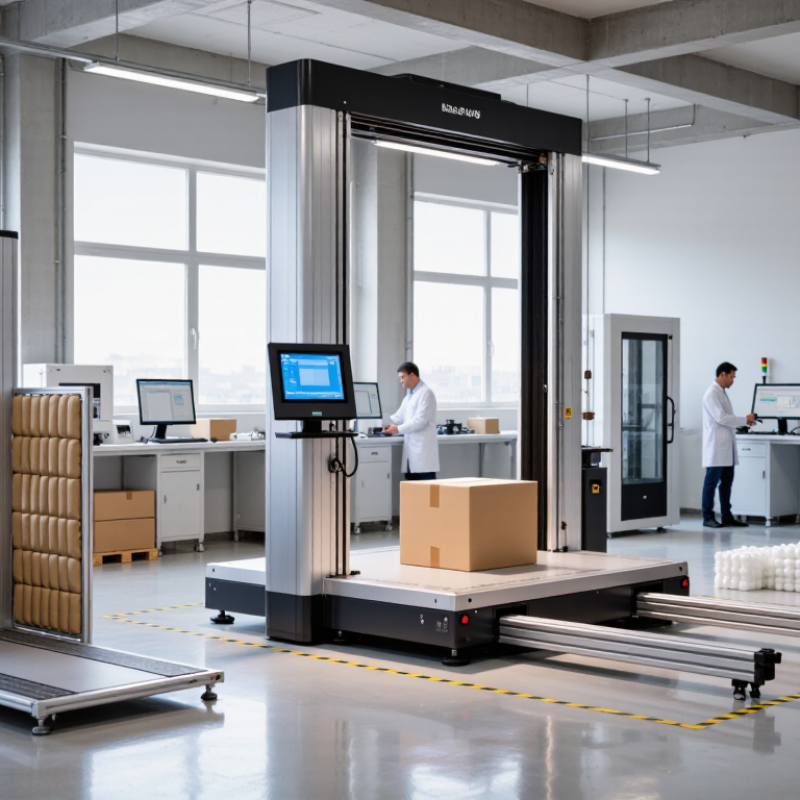
Global buyers need reliable evidence before selecting Drop Test Equipment for packaging, logistics, and product validation. A damaged carton may reveal weak corners, poor cushioning, or an unsuitable shipping design. These failures often appear after repeated drops, not during a single laboratory test. The right equipment helps manufacturers reproduce those impacts under controlled conditions. It also supports clearer comparisons between suppliers, package formats, and protective materials. This guide examines major equipment types for 2026, including free-fall testers, guided drop testers, edge-and-corner impact systems, and automated package testing machines. Each type serves a different purpose. Price matters, but repeatability matters more.
A practical purchasing decision should consider test height, specimen weight, platform size, impact surface, control accuracy, and operator safety. Buyers should also check calibration records, software traceability, service coverage, and spare-part availability. Small details matter. A loose clamp can distort results. A worn platform can create misleading impacts. International teams should verify applicable ASTM, ISO, ISTA, or customer-specific procedures before ordering. Standards are not interchangeable, and a familiar label does not guarantee a suitable configuration. In real production environments, budget models may perform adequately, yet their data logging or adjustment systems can be limited. That weakness deserves attention. No single machine fits every laboratory, warehouse, or product category. The strongest choice combines credible test data, practical experience, and support from a qualified supplier. This overview aims to make that evaluation more precise, while acknowledging that equipment selection sometimes requires careful compromise.
2026 Top Drop Test Equipment Types for Global Buyers
What Drop Test Equipment Is and Why It Matters in 2026
Drop test equipment simulates the impacts a product faces during handling, storage, and delivery. Common systems include free-fall drop testers, rotating-arm testers, incline impact testers, and shock data recorders. Each reveals different weaknesses. A free-fall unit checks faces, edges, and corners. A rotating-arm system creates faster, repeatable impacts.
The need is growing with parcel volume. The Pitney Bowes Parcel Shipping Index reported about 161 billion parcels worldwide in 2022. More parcels mean more handling events and more damage opportunities. The World Bank’s 2023 Logistics Performance Index also evaluates shipment reliability and timeliness. A package that survives controlled testing is easier to protect across unpredictable routes. Still, a laboratory result is not reality. Humidity, vibration, pallet stacking, and careless handling can change outcomes.
Tips: Match the tester to the product’s mass, dimensions, and transport method. Use calibrated sensors and record damage with clear photographs. Review ISTA or ASTM procedures before selecting a test height. Test the weakest corner first. It is often revealing. Do not chase a perfect score too early; overpackaging can increase material use, freight cost, and environmental pressure. Retest after changing cushioning, sealing tape, or carton design. A small design change can produce a large impact difference.
A practical comparison of commonly used drop and impact testing equipment for packaging, electronics, consumer products, and industrial goods
| Equipment Type | Primary Test Principle | Typical Test Specimens | Common Working Range | Key Measurements or Outputs | Relevant Standards and Methods | Main Buyer Advantages | Important Selection Considerations |
|---|---|---|---|---|---|---|---|
| Free-Fall Drop Tester | A packaged product is released from a specified height onto a rigid, level impact surface. | Cartons, shipping cases, retail packages, small appliances, and electronic products. | Drop heights commonly range from approximately 300 to 1,500 mm; load capacity depends on the frame design. | Damage after impact, package deformation, product functionality, drop orientation, and failure location. | ASTM D5276, ISO 2248, ISTA package-testing procedures, and applicable internal protocols. | Versatile Suitable for repeated face, edge, and corner drops with relatively simple operation. |
Confirm usable height, payload capacity, release accuracy, impact-table rigidity, specimen dimensions, and operator safety guarding. |
| Automatic Programmable Drop Tester | Motorized lifting and controlled release systems execute predefined drop heights and test sequences. | Consumer electronics, packaged food, medical devices, automotive components, and export packaging. | Often configured for programmable heights from several hundred millimeters to about 2,000 mm, subject to model design. | Drop sequence, height, cycle count, test time, orientation, and pass/fail results when connected to inspection software. | ASTM D5276, ISO 2248, ISTA test protocols, and customer-specific validation procedures. | Repeatable Improves consistency between operators and supports higher-throughput quality control. |
Evaluate control-system traceability, recipe storage, sensor calibration, emergency-stop functions, and data-export capability. |
| Double-Column Guided Drop Tester | A carriage travels along guided columns before releasing or impacting the specimen, helping maintain alignment. | Heavy cartons, large appliances, furniture packages, machinery parts, and industrial shipping containers. | Common designs support payloads from approximately 50 kg to more than 200 kg, with height selected according to the application. | Structural damage, package integrity, product displacement, impact orientation, and repeatability of the drop event. | ASTM D5276, ISO 2248, ISTA procedures, and project-specific heavy-package requirements. | Heavy-Duty Better suited to large or heavy specimens than compact laboratory drop testers. |
Check column rigidity, maximum specimen size, lifting speed, floor anchoring, impact-surface thickness, and maintenance access. |
| Inclined Impact Tester | A carriage travels down an inclined track and impacts a fixed stop or barrier to simulate horizontal handling shocks. | Unit loads, pallets, shipping cases, drums, containers, and distribution packaging. | Typical carriage velocities are approximately 1.1 to 2.5 m/s, depending on the incline, release height, and system configuration. | Impact velocity, impact direction, package movement, load stability, product damage, and restraint performance. | ASTM D880, ASTM D4003, ISO 2244, and relevant ISTA distribution-test methods. | Transport-Focused Replicates impacts caused by vehicle handling, conveyor transfers, and pallet movement. |
Review carriage capacity, barrier geometry, track length, velocity measurement, specimen restraint, and available floor space. |
| Rotational Edge Drop Tester | The package is rotated about a defined edge and released so that a selected edge or corner contacts the impact surface first. | Corrugated boxes, retail packages, fragile products, and packages requiring corner-impact evaluation. | Drop height is commonly adjustable from approximately 100 to 1,000 mm, depending on the fixture and test method. | Corner and edge damage, seal failure, cushioning performance, internal product movement, and package stability. | ASTM D6179, ISO 2248, and applicable ISTA procedures for packaged-products testing. | Targeted Provides controlled evaluation of vulnerable edges and corners that may not be isolated in a flat drop. |
Verify edge-selection accuracy, fixture compatibility, package dimensions, rotation control, and repeatable release performance. |
| Shock and Drop Impact Tester | A specimen or test platform receives a controlled shock pulse generated by a drop, pneumatic, hydraulic, or mechanical impact system. | Electronic assemblies, automotive components, aerospace hardware, instruments, and ruggedized products. | Shock severity is defined by acceleration, velocity change, pulse duration, and waveform rather than drop height alone. | Acceleration-time history, peak acceleration, pulse duration, velocity change, frequency response, and product functional status. | IEC 60068-2-27, MIL-STD-810, ISO 9022, and product-specific shock qualification methods. | Engineering-Level Useful when product response and shock-pulse characteristics are more important than visible package damage. |
Prioritize accelerometer bandwidth, sampling rate, pulse-shaping capability, fixture resonance, calibration, and analysis software. |
| Small-Product Drop Tester | A compact release mechanism drops individual products or small packages onto a rigid surface under controlled conditions. | Mobile devices, handheld tools, cosmetics, laboratory items, bottles, and small consumer products. | Typical drop heights range from approximately 300 to 2,000 mm, with payloads usually below 10 kg. | Housing cracks, screen damage, leakage, component detachment, cosmetic damage, and post-drop functionality. | IEC 60068-2-31, ASTM D5276 where packaging is evaluated, and product-specific reliability test plans. | Space-Efficient Fits product laboratories and production quality areas with limited floor space. |
Check fixture adaptability, release repeatability, specimen orientation, impact surface, enclosure safety, and test-cycle efficiency. |
| Rotating Drum Drop Tester | Products or packages tumble inside a rotating drum and repeatedly fall through a controlled height. | Hand tools, portable equipment, small containers, consumer products, and components exposed to repeated handling. | Drum dimensions and drop height vary by application; repeated impacts are generally performed at a controlled rotational speed. | Number of impacts, visible damage, functional degradation, loose parts, surface wear, and housing durability. | IEC 60068-2-32 and product-specific tumbling or repeated-drop procedures. | Repeated Impact Efficient for evaluating durability under multiple uncontrolled-looking but repeatable tumbles. |
Confirm drum size, internal surface material, rotational speed, cycle counter, noise control, and specimen loading limits. |
| Drop Tower with Instrumented Impact Platform | A guided mass or carriage produces a controlled impact while sensors record the response of the platform or specimen. | Protective packaging, cushioning materials, helmets, sports equipment, components, and structural materials. | Energy and impact severity are configured according to the falling mass, drop height, fixture, and required waveform. | Force, acceleration, displacement, impact energy, contact duration, transmitted shock, and cushioning efficiency. | ASTM D1596, ASTM D3763 for certain impact applications, ISO 8568, and application-specific procedures. | Data-Rich Supports material characterization and optimization of cushioning or protective designs. |
Assess sensor range, sampling frequency, impact-platform stiffness, signal conditioning, calibration, and data-analysis compatibility. |