Leave Your Message

Top Drop Test Equipment Manufacturers for Global Buyers

Global packaging is under growing pressure from e-commerce, longer transport routes, and stricter quality expectations. Smithers’ The Future of Global Packaging to 2028 reports continued packaging growth, supported by online retail and international distribution. That trend creates a practical question for buyers: which Drop Test Equipment manufacturers can deliver reliable, repeatable protection testing?

A credible supplier should offer more than a catalog and an attractive price. Equipment must support recognized methods, including ASTM D5276, ISO 2248, and relevant ISTA procedures. These standards help laboratories simulate drops from pallets, conveyors, and handling surfaces. A good machine should also provide accurate height control, secure specimen positioning, durable impact surfaces, and traceable calibration records. Small details matter. A weak clamp can distort the result. An unstable platform can invalidate a test.

Industry reports from MarketsandMarkets and Grand View Research identify packaging testing as a steadily expanding market, driven by safer shipping and higher product-performance requirements. However, market growth does not automatically prove manufacturer quality. That assumption deserves caution. Global buyers should examine installation support, spare-parts access, software documentation, and service response times. They should also request test videos, calibration certificates, and references from similar industries.

This guide evaluates leading manufacturers through those practical criteria. It considers laboratory capability, customization, international support, and long-term operating value. No ranking is flawless. Buyer requirements differ between electronics, pharmaceuticals, food packaging, and industrial components. The strongest choice is therefore not always the cheapest or most famous supplier. It is the manufacturer whose equipment produces dependable evidence under real shipping conditions.
Top Drop Test Equipment Manufacturers for Global Buyers

What Drop Test Equipment Is and Why It Matters

Drop Test Equipment: What It Is and Why It Matters

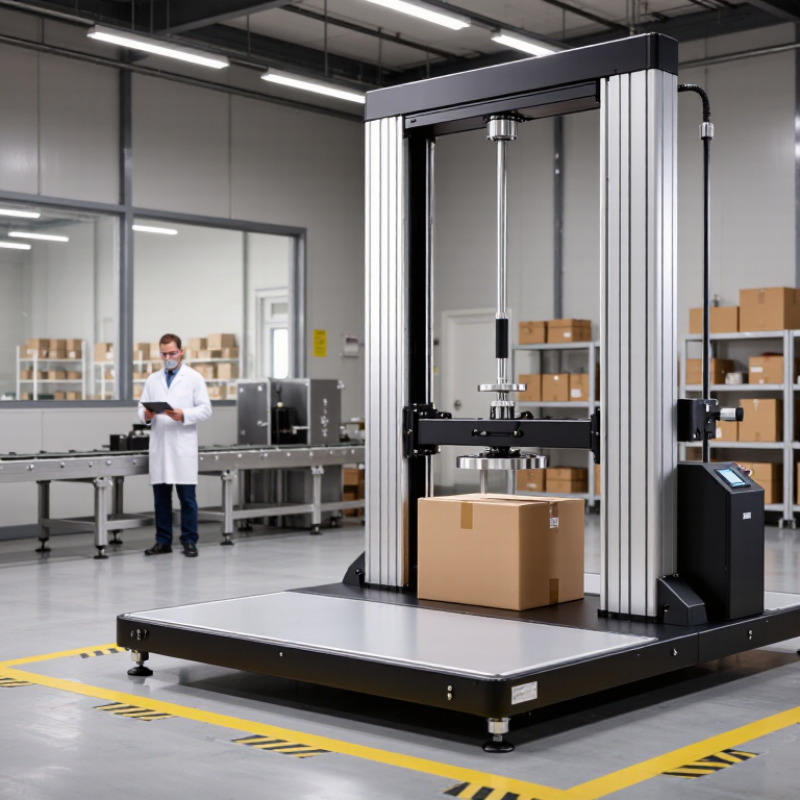
Drop test equipment recreates impacts that packages experience during handling, storage, and delivery. A typical system raises a packed product, releases it from a controlled height, and records damage after impact. Tests may use flat, edge, or corner drops. Fixtures, sensors, and adjustable platforms make each trial repeatable. Standards such as ASTM D5276 and ISTA 3A guide heights, orientations, and conditioning steps. This structure matters because casual warehouse testing can hide weak packaging joints or poorly supported components. It is not glamorous work. It is practical risk control.

The U.S. Census Bureau reported 2024 retail e-commerce sales of about $1.19 trillion, representing 16.1% of total retail sales. More parcels now pass through automated sorting and repeated manual handling. One unnoticed impact can create returns, replacement costs, and customer distrust. Drop equipment helps engineers compare carton designs before large-scale shipping. It supports evidence-based decisions about cushioning thickness, closure strength, and product placement. Yet a laboratory pass is not a delivery guarantee. Real routes include humidity, vibration, temperature changes, and careless handling. That assumption deserves scrutiny. Experienced teams often combine drop testing with compression, vibration, and environmental conditioning. Results should record test height, impact surface, failure mode, package condition, and photographs. These details make findings traceable for global equipment buyers.
Top Drop Test Equipment Manufacturers for Global Buyers

What Drop Test Equipment Is and Why It Matters

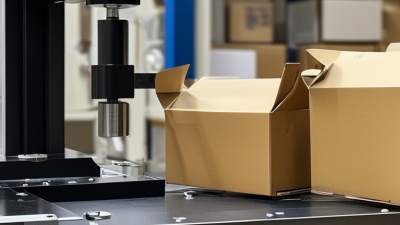
Drop test equipment evaluates whether packaged products can withstand impacts during handling, transport, and distribution. The chart shows representative ISTA 1A free-fall drop heights by packaged-product weight band. Heavier packages generally require lower drop heights, while the exact test sequence and conditions should always be confirmed against the latest applicable standard.

How Global Buyers Define Drop Test Requirements

How Global Buyers Define Drop Test Requirements

Global buyers define drop-test requirements from the journey, not from a catalog number. The 2023 Pitney Bowes Parcel Shipping Index recorded 161.1 billion parcels worldwide in 2022. That volume creates more handoffs, conveyors, vehicles, and delivery surfaces. Buyers should map each shock risk before selecting equipment. Record package mass, dimensions, center of gravity, closure method, and cushioning thickness. Include palletized and parcel shipments separately. They behave differently.

Test severity should follow recognized procedures, such as ASTM D5276 or an ISTA distribution procedure. These standards help define drop height, orientation, conditioning, and acceptance criteria. Requirements also depend on destination climate. The World Bank Logistics Performance Index 2023 identified reliability as a core logistics dimension, not speed alone. Therefore, buyers should condition samples at expected temperature and humidity. Inspect product function, seal opening, visible damage, and internal movement. Use calibrated height control, a rigid impact surface, and repeatable release. Small details matter.

Do not ask only, “What is the maximum drop height?” Ask, “Which failure must this test reveal?”

A 20-kilogram carton may need edge and corner impacts. A small retail pack may need repeated face drops. Shipping is messy. A clean laboratory result can still hide poor field performance. A recurring industry weakness is overemphasizing peak height while ignoring sample conditioning. Buyers should request traceable calibration records, raw observations, fixture dimensions, and uncertainty statements. Test equipment is useful only when its settings represent the actual distribution chain.

Key Criteria for Comparing Equipment Manufacturers

Top Drop Test Equipment Manufacturers for Global Buyers

Key Criteria for Comparing Equipment Manufacturers

A reliable comparison starts with test purpose, not catalog appearance. Define the package weight, drop height, product orientation, and required test frequency. A laboratory testing fragile electronics may need tighter height control than a warehouse checking shipping cartons. Measure twice.

Check whether the manufacturer follows recognized methods, such as ASTM or ISTA procedures. Ask for calibration records, uncertainty data, and traceable certificates. A durable frame is useful, but repeatable results matter more. Review platform flatness, release speed, impact detection, and emergency controls. These details affect every test result. Small differences can matter.

Service capability deserves equal attention. Confirm installation support, operator training, spare-part availability, and software updates in the destination country. Request a sample test report using packaging similar to yours. It reveals how clearly the system records height, orientation, impact, and observations. A polished brochure can still hide weak documentation. That deserves scrutiny.

Compare total ownership cost, not only purchase price. Include shipping, installation, calibration, maintenance, energy use, and downtime. Ask how quickly technical issues are normally handled and whether remote diagnostics are available. Some evaluations overlook floor space and power requirements. That mistake becomes expensive later. Leave room for future testing needs, because package designs rarely remain unchanged.

Top Drop Test Equipment Manufacturers for Global Buyers - Key Criteria for Comparing Equipment Manufacturers
Comparison Dimension Recommended Technical Benchmark Relevant Test Method or Reference Why It Matters to Global Buyers Verification Points
Drop Height Range Approximately 300–2,000 mm, with programmable height selection and repeatable positioning. ASTM D5276 and ISO 2248 define procedures for free-fall drops of loaded containers. Supports testing of small parcels, retail packaging, and larger distribution packs across different handling conditions. Confirm the usable height, adjustment resolution, height display accuracy, and whether the stated range applies under full rated load.
Rated Payload Common laboratory configurations support approximately 60–200 kg; higher-capacity systems are available for industrial packaging. Payload should be selected according to the maximum gross mass of the package under test. A suitable payload rating prevents overload, protects the lifting mechanism, and allows future product development. Check maximum load, load-center limitations, platform dimensions, and safety factor used in the design.
Drop Orientation Capability for face, edge, and corner drops, with adjustable or interchangeable orientation fixtures. ASTM D5276, ISO 2248, and ISTA procedures commonly require specific package orientations. Accurate orientation control improves repeatability and helps identify the weakest package surfaces and seams. Review fixture repeatability, angle adjustment, corner alignment, and compatibility with irregular packages.
Release Mechanism Rapid, low-friction release that minimizes rotation and sideways movement before impact. Free-fall testing requires the package to be released without unintended horizontal force. Clean release conditions improve test validity and reduce variation between repeated drops. Ask for release-time specifications, release repeatability data, and evidence of minimal pre-impact interference.
Impact Surface Rigid, level steel impact table with sufficient thickness and stiffness for the rated payload. Packaging drop tests generally require a hard, flat, non-resilient impact surface. A stable impact surface ensures that absorbed energy is primarily evaluated through the package and product system. Verify table material, flatness tolerance, thickness, anchoring method, and resistance to permanent deformation.
Height Accuracy Typical buyer target: height-setting accuracy within approximately ±1% of the selected height or better. Accuracy requirements depend on the applicable internal procedure or test standard. Consistent drop height is essential for comparing package designs and validating corrective actions. Request calibration procedures, traceability documents, measurement uncertainty, and actual verification records.
Test Repeatability Stable results across repeated drops with controlled release, alignment, and reset procedures. Repeatability is a practical quality criterion rather than a single universal numeric limit. Reliable repeatability reduces false failures and makes supplier or design comparisons more meaningful. Review repeatability studies, reset time, fixture wear controls, and recommended maintenance intervals.
Control System Digital control of drop height, test sequence, sample identification, and operator safety interlocks. Automated sequence control is useful for multi-drop protocols such as ISTA testing. Automation improves traceability, reduces operator error, and supports repeatable production or laboratory workflows. Check data export formats, user permissions, event logs, multilingual support, and power-failure recovery.
Measurement Capability Optional impact sensing, acceleration measurement, high-speed video integration, or force measurement. These capabilities complement, but do not replace, visual inspection and package performance criteria. Additional measurements help identify shock transmission, cushioning performance, and failure mechanisms. Confirm sensor range, sampling rate, calibration method, mounting repeatability, and software compatibility.
Safety Protection Interlocked enclosure or guarded test area, emergency stop, overload protection, and controlled access. Safety design should comply with the buyer’s local machinery and laboratory requirements. Drop testing involves elevated loads and sudden impact energy, so effective guarding is essential for operators. Evaluate guard construction, door interlocks, emergency-stop response, warning indicators, and risk-assessment documentation.
Machine Construction Rigid welded or heavy-duty framed structure with corrosion-resistant or coated surfaces. Structural stiffness supports alignment, repeatability, and long-term performance. Robust construction lowers vibration, reduces maintenance, and improves reliability in frequent-use laboratories. Review frame material, weld quality, anchoring requirements, surface treatment, and stated service life.
Package Compatibility Adjustable fixtures suitable for cartons, crates, drums, bags, and other distribution containers within the rated envelope. Package geometry and mass vary significantly between consumer, industrial, and e-commerce applications. Flexible compatibility protects the buyer’s investment when product formats or packaging designs change. Confirm maximum package dimensions, minimum sample size, fixture changeover time, and custom-fixture options.
Standards Support Documented support for ASTM D5276, ISO 2248, and applicable ISTA procedures. ASTM D5276 and ISO 2248 address vertical impact testing of loaded containers; ISTA methods define packaged-product test sequences. Standards support improves audit readiness and helps laboratories align internal procedures with customer requirements. Ask for a standards compliance matrix and identify which features are standard, optional, or dependent on test setup.
Calibration and Service Documented calibration plan, replaceable wear parts, remote support, and access to qualified service personnel. Calibration should be traceable to recognized national or international measurement systems where required. Strong service capability reduces downtime and supports defensible test results over the equipment lifecycle. Compare calibration frequency, service response time, spare-parts availability, warranty terms, and technician coverage.
Installation Requirements Clearly specified floor loading, anchoring, clearance, electrical supply, and environmental conditions. Requirements vary with machine size, payload, drive system, and enclosure configuration. Early confirmation prevents installation delays, unexpected construction costs, and unsuitable laboratory layouts. Request a foundation drawing, utility schedule, shipping dimensions, installation method, and commissioning checklist.
Total Cost of Ownership Evaluate purchase price together with installation, calibration, fixtures, software, training, maintenance, and energy use. Lifecycle cost is more informative than initial equipment price alone. A transparent cost model helps global buyers compare proposals fairly and forecast long-term operating expenses. Require a complete quotation with optional items, consumables, service rates, delivery terms, and estimated annual maintenance cost.

Top Drop Test Manufacturers and Their Product Strengths

Top drop test manufacturers serve packaging, electronics, logistics, and consumer goods companies. Their strongest products combine repeatable impact control, rigid frames, and clear measurement systems. Experienced suppliers usually offer free-fall testers, edge-and-corner fixtures, and guided impact platforms. Each design addresses a different handling risk.

A reliable manufacturer builds equipment around test height, package weight, and product geometry. Some models support quick height adjustment, while others provide motorized lifting for frequent laboratory use. High-quality units use calibrated sensors, reinforced platforms, and protective enclosures. These details reduce operator exposure and improve repeatability. Digital controllers also record drop height, impact sequence, and test counts. Small details matter.

Leading manufacturers often support custom fixtures for bottles, cartons, batteries, or irregular assemblies. They may provide installation training, calibration guidance, and replacement components. That service matters when a machine operates every day. However, the most expensive system is not always the most suitable. A compact manual tester may serve a small laboratory better than an automated line.

Buyers should review actual sample dimensions before choosing equipment. Ask whether the platform remains stable under the maximum load. Check the controller’s data export options, because basic reporting can slow quality investigations. Some suppliers describe accuracy broadly, but practical performance depends on maintenance and operator habits. Even strong equipment can produce weak results when the package is positioned inconsistently. Test procedures need review, not blind trust.

How to Assess Compliance, Support, and Total Cost

Top Drop Test Equipment Manufacturers for Global Buyers

Compliance should be checked before comparing machine prices. Ask whether the equipment supports the required method, drop height, load range, and impact surface. Standards such as ISO 2248 and ASTM D5276 may require different procedures. Request calibration certificates with traceability to recognized laboratories. Examine sample test reports, not just specification sheets. A clear report should record height, package orientation, impact sequence, and measured results. Small omissions can weaken an otherwise careful test.

Support is easier to judge through practical questions. Who installs the machine at your facility? How quickly can engineers respond to a fault? Are remote diagnostics, operator training, spare parts, and manuals included? Check electrical compatibility, language options, and local service coverage. I have seen buyers focus on delivery dates, then discover that commissioning requires extra technicians. That assumption was avoidable.

Total cost includes more than the purchase order. Calculate freight, installation, customs handling, calibration, software updates, fixtures, and annual maintenance. Estimate downtime if a controller or lifting mechanism fails. Ask for a three-year ownership estimate with service intervals and replacement-part prices. A low quote may exclude essential fixtures or safe operating features. Compare identical configurations, or the result becomes misleading. Even experienced teams can miss recurring costs when procurement and laboratory staff work separately. A shared checklist helps, though it may need revision after the first installation.