- Home
- Products
- About Us
- Resources
- Support
- Blog
- Contact Us
Leave Your Message
-
Phone
-
E-mail
-
Whatsapp
-
WeChat


Selecting a Corrosion Testing Chamber is not simply a matter of comparing cabinet sizes or price tags. The right chamber must reproduce the exposure conditions your product will face, from coastal salt spray to humid industrial air. A reliable choice protects test validity, laboratory safety, and long-term research budgets.
Pierre R. Roberge, a respected corrosion engineering author, wrote, “Corrosion is the destructive attack of a metal by chemical or electrochemical reaction with its environment.” That definition explains why chamber selection requires technical judgment. Temperature stability, humidity control, spray uniformity, solution quality, specimen capacity, and programmable cycles can all influence the final result. A chamber that looks impressive may still produce uneven droplets, unstable temperature, or misleading corrosion patterns.
Real testing is rarely perfect.
This guide presents seven practical tips for choosing a Corrosion Testing Chamber. It considers standards, chamber construction, control accuracy, maintenance access, data recording, energy use, and supplier support. For example, stainless-steel panels, a calibrated pH meter, and a clearly visible spray nozzle can reveal more than a glossy product brochure. Operators should also question whether the chamber supports their actual specimen size and exposure duration.
Some laboratories choose oversized equipment and later discover unnecessary water use or difficult cleaning. Others focus on initial cost and overlook calibration service. Those mistakes are understandable, but they deserve reflection. The best decision connects technical requirements with daily laboratory experience. It also leaves room for future test methods, changing standards, and unexpected material combinations.
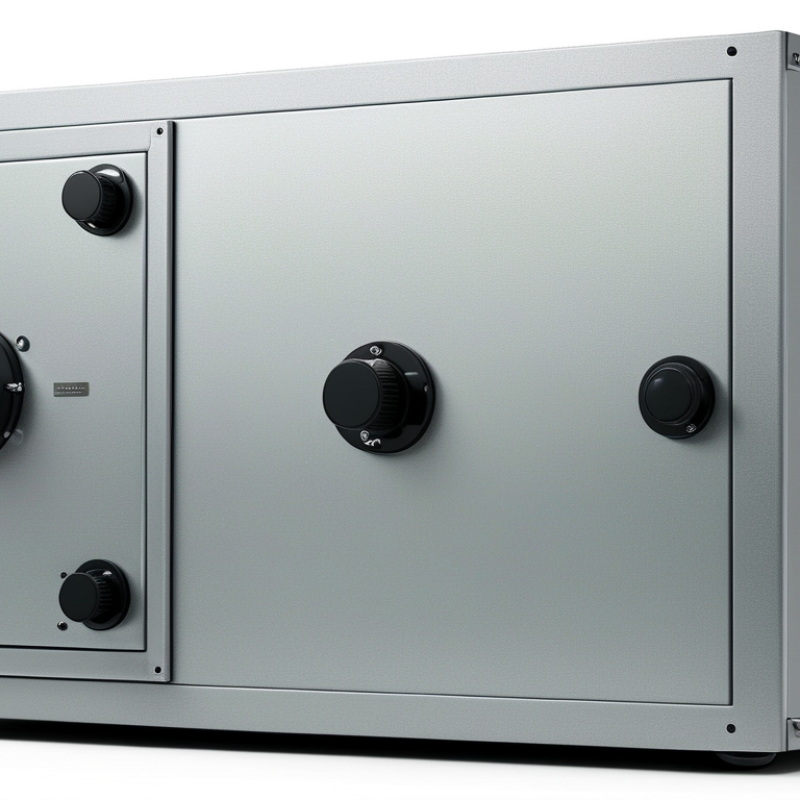
Choosing a corrosion testing chamber starts with clear test requirements, not cabinet size. Define the material, coating system, specimen dimensions, exposure duration, and evaluation method. Record salt concentration, solution pH, temperature, humidity, spray rate, and specimen angle. These details prevent vague results and costly retesting.
Tip: Match the chamber to the applicable standard. ASTM B117 and ISO 9227 support neutral salt spray testing, while cyclic corrosion standards may better represent outdoor conditions. The correct standard depends on the product, environment, and customer specification. Never assume one test predicts every service condition.
Tip: Check how the chamber controls and verifies key conditions. Look for stable temperature, uniform spray distribution, reliable collection funnels, and accessible calibration points. Ask for recent measurement records, not only a factory claim. In practice, blocked nozzles or poor specimen placement can distort results. It happens.
Define acceptance criteria before testing begins. Decide how to rate blistering, rust, creepage, or coating loss, and specify the inspection intervals. Use qualified operators and consistent photography. A chamber may meet the standard, yet weak documentation can still undermine confidence. I have found that small recording gaps become major questions during audits. Review the method honestly, because a convenient test setup may not represent actual corrosion exposure.
| Tip | Selection Dimension | Applicable Standard or Reference | Realistic Test Requirements and Data | Chamber Selection Guidance |
|---|---|---|---|---|
| 1 | Define the corrosion test objective | ASTM B117 ISO 9227 ASTM G85 | Identify whether the test is intended for coating screening, process comparison, quality control, failure analysis, or qualification. Salt spray testing primarily provides comparative corrosion performance data and does not directly predict outdoor service life. | Choose a chamber and control system that can run the exact exposure method required by the product specification, rather than selecting equipment only by chamber volume or nominal spray duration. |
| 2 | Select the correct test method | ISO 9227 ASTM B117 ASTM G85 | Neutral salt spray commonly uses a sodium chloride solution with a mass fraction of 5% and a pH near 6.5–7.2. ISO 9227 also covers acetic acid salt spray and copper-accelerated acetic acid salt spray, which use different solution chemistry and operating controls. | For neutral salt spray, use a chamber designed for continuous atomized spray. For cyclic corrosion testing or modified methods, select equipment with programmable spray, humidity, drying, and temperature phases. |
| 3 | Verify temperature and humidity capability | ISO 9227 ASTM B117 | Neutral salt spray exposure is commonly controlled at 35 °C in the test chamber. The collected spray volume is typically checked at approximately 1.0–2.0 mL per hour for each 80 cm² collection area, depending on the applicable method and laboratory procedure. | Confirm temperature uniformity, recovery time after opening, sensor calibration, and the ability to maintain stable conditions during continuous operation. For cyclic tests, verify the full temperature and relative-humidity range required by the selected profile. |
| 4 | Check solution preparation and atomization | ISO 9227 ASTM B117 | Test solution quality affects repeatability. Typical controls include sodium chloride concentration, solution pH, water purity, reservoir cleanliness, compressed-air quality, and the absence of prohibited contamination. The spray should be continuous and sufficiently fine to collect as liquid without excessive droplet impact. | Select equipment with a corrosion-resistant reservoir, adjustable atomizing-air control, reliable spray nozzles, accessible filters, and a practical method for checking collection rate and solution concentration. |
| 5 | Match internal size and specimen loading | ISO 9227 ASTM B117 | Specimens should be positioned so that spray can reach the exposed surfaces and specimens do not contact one another. The test area must be large enough for the required number of panels, components, racks, and reference specimens without blocking spray distribution. | Calculate usable internal volume rather than relying on the advertised chamber volume. Consider specimen dimensions, rack spacing, drainage, door clearance, and future test capacity. Avoid overloading, which can create shadowing and non-uniform exposure. |
| 6 | Assess materials, drainage, and laboratory safety | ISO 9227 ASTM B117 ASTM G85 | Salt fog is highly corrosive. Wetted parts should resist chloride exposure, and condensate must be prevented from dripping onto specimens. Exhaust mist, acidic solutions, wastewater, and accidental leaks require suitable laboratory controls. | Look for corrosion-resistant chamber construction, sealed joints, sloped drainage, independent waste collection, exhaust management, over-temperature protection, low-solution alarms, and an emergency stop function. Confirm that installation meets local electrical, ventilation, and chemical-waste requirements. |
| 7 | Plan verification, calibration, and reporting | ISO 9227 ASTM B117 ISO/IEC 17025 | A defensible test record should include the standard and revision, specimen identification, exposure duration, solution concentration and pH, chamber temperature, spray collection rate, specimen orientation, interruptions, calibration status, and rating method. | Select a chamber with data logging, password-controlled settings, alarm history, calibration access, and easily replaceable sensors. Establish routine checks for temperature, spray collection, pH, concentration, nozzle condition, and chamber cleanliness before testing. |