- Home
- Products
- About Us
- Resources
- Support
- Blog
- Contact Us
Leave Your Message
-
Phone
-
E-mail
-
Whatsapp
-
WeChat


Choosing an Aging Testing Room is not merely a purchasing exercise. It is a reliability decision involving temperature, humidity, airflow, calibration, safety, and long-term operating costs. A chamber may look impressive under showroom lighting, yet fail when sensors drift or samples block circulation. That uncomfortable possibility deserves attention.
Industry data supports this concern. MarketsandMarkets’ 2024 Environmental Test Chambers Market analysis identifies rising demand for controlled testing in electronics, automotive, pharmaceutical, and materials manufacturing. NIST guidance also emphasizes measurement traceability, uncertainty evaluation, and repeatable procedures. Meanwhile, IEC 60068-2-78, ASTM D4332, ASTM G154, and ISO 4892-3 provide practical frameworks for damp-heat, storage, and accelerated weathering tests. These standards do not select a room for you. They reveal what your room must control.
Dr. Michael Pecht, a recognized reliability engineering expert, defines reliability as “the probability that a product will perform its intended function for a specified period of time under specified conditions.” That sentence changes the buying question. The best Aging Testing Room is not always the largest or most expensive. It should match your product, test profile, sample load, maintenance capability, and evidence requirements. Look closely at uniformity maps, recovery time, alarm records, calibration certificates, and service response. Small details matter. A perfect specification does not guarantee perfect results. This guide presents seven practical tips, while admitting one limitation: laboratory conditions can never represent every real-world failure. Good testing reduces uncertainty; it does not eliminate it.
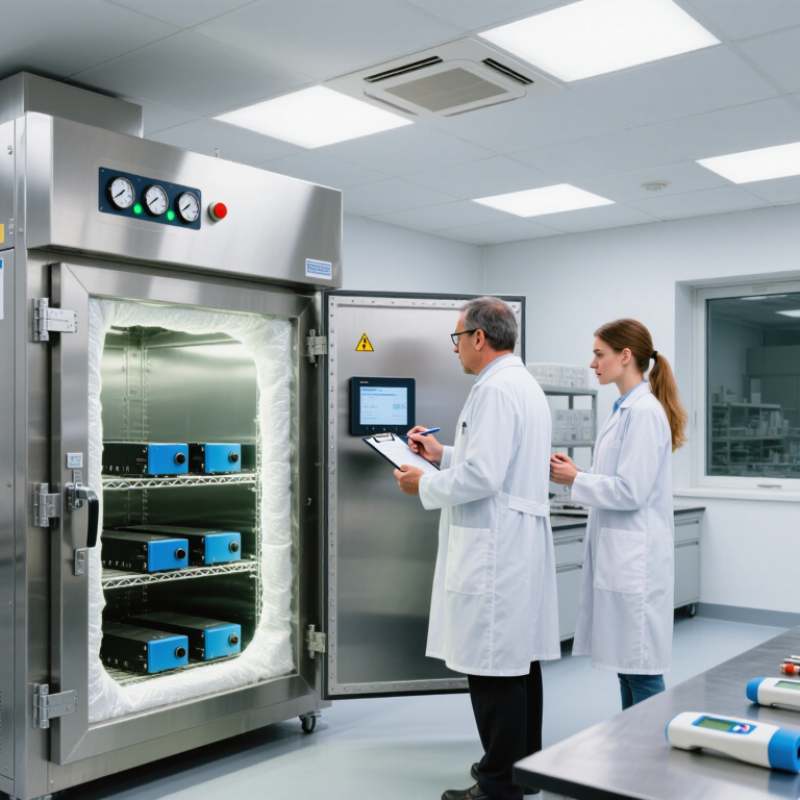
Choosing an aging testing room begins with a precise question: what must the product survive? Define the failure mode before selecting equipment. Seal degradation, color fading, corrosion, and battery capacity loss require different stresses. The 2024 Global E-waste Monitor reported 62 million tonnes of electronic waste in 2022, highlighting the need for longer product life. Your test should reflect real use, not only impressive temperature numbers.
Write down the target temperature, humidity, exposure time, cycling pattern, and inspection intervals. IEC 60068-2-1, IEC 60068-2-2, and IEC 60068-2-14 provide recognized methods for cold, dry heat, and temperature change testing. A common engineering estimate says a 10°C rise may double some reaction rates, but this rule is not universal. Materials can crack, soften, or react differently. Test records should include sensor locations, calibration status, sample quantity, and unexpected observations. Small details matter.
Use measured field data when possible. The National Renewable Energy Laboratory has reported typical photovoltaic degradation near 0.5% annually, although results vary by climate and design. This shows why accelerated aging needs careful correlation with outdoor performance. A perfect test plan is a myth. Early assumptions may be wrong. Review the conditions after pilot testing, especially when condensation appears on chamber walls or samples fail unrealistically fast. Reliable decisions come from controlled stress, repeatable measurements, and honest doubt.
A practical data table for selecting test objectives, environmental conditions, chamber capabilities, and evaluation methods
| Tip | Testing Objective | Recommended Aging Condition | Typical Parameters | Key Room or Chamber Requirements | Measurements and Acceptance Criteria | Relevant Reference |
|---|---|---|---|---|---|---|
| 1 | Establish a reliable baseline before accelerated aging. | Controlled standard atmosphere | 23 ± 2 °C 50 ± 5% RH Condition specimens until temperature and moisture equilibrium is reached. |
Stable temperature and humidity control, calibrated sensors, clean air circulation, and sufficient space for specimen conditioning. | Record initial mass, dimensions, appearance, color, electrical performance, mechanical strength, or other product-specific properties. | ISO 554 standard atmospheres for conditioning and testing |
| 2 | Evaluate degradation caused primarily by elevated temperature. | Dry-heat aging | Common screening points include 70 °C, 85 °C, or 105 °C, depending on the material or product rating. Duration should be defined by the test plan. | Uniform temperature distribution, independent over-temperature protection, continuous temperature logging, and materials compatible with the selected temperature. | Check discoloration, cracking, embrittlement, mass loss, dimensional change, insulation resistance, sealing performance, or tensile strength. | IEC 60068-2-2, Tests B: Dry heat |
| 3 | Assess moisture resistance, corrosion risk, swelling, and insulation deterioration. | Damp-heat steady-state aging | 40 ± 2 °C 93 ± 3% RH Use the exposure duration specified by the product standard or engineering plan. |
High-humidity capability, condensation control, corrosion-resistant interior surfaces, calibrated humidity sensors, and safe drainage. | Inspect corrosion, leakage current, insulation resistance, adhesion, swelling, mold growth, and functional performance after recovery. | IEC 60068-2-78, Test Cab: Damp heat, steady state |
| 4 | Determine whether low temperature affects storage, startup, flexibility, or material integrity. | Cold exposure and low-temperature operation | Typical engineering screening may use 0 °C, −20 °C, or −40 °C. The selected temperature must match the intended service or storage environment. | Low-temperature capability, controlled specimen stabilization, sufficient airflow, door recovery performance, and protection against frost-related measurement errors. | Measure startup time, torque, flexibility, brittleness, display response, battery behavior, dimensional change, and post-test functionality. | IEC 60068-2-1, Tests A: Cold |
| 5 | Reveal failures caused by repeated expansion and contraction. | Temperature cycling or change-of-temperature testing | An illustrative engineering profile is −40 °C to +85 °C with defined dwell times and controlled transitions. The actual profile must reflect the application. | Fast temperature transition capability, low specimen thermal lag, programmable cycle control, adequate clearance, and synchronized data acquisition. | Inspect solder joints, seals, bonds, housings, connectors, coatings, and electrical continuity. Compare performance before and after cycling. | IEC 60068-2-14, Tests N: Change of temperature |
| 6 | Evaluate outdoor weathering, including ultraviolet exposure, heat, and moisture. | Accelerated light or UV weathering | Use a defined lamp type, irradiance, black-standard or black-panel temperature, condensation or water-spray cycle, and exposure duration. | Uniform irradiance, lamp monitoring, temperature control, water-spray or condensation capability where required, specimen rotation, and calibrated radiometer access. | Measure color change, gloss loss, chalking, cracking, yellowing, tensile retention, surface erosion, and water absorption. | ISO 4892-3 for fluorescent UV exposure methods; select the cycle according to the material and intended environment. |
| 7 | Confirm that the aging room can produce defensible and repeatable results. | Qualification, uniformity, and monitoring verification | Verify temperature and humidity mapping at the planned set points. Use calibrated instruments with traceable records and define alarm limits before testing. | Documented calibration, chamber uniformity data, alarm and interlock functions, sample-load limits, access control, backup power considerations, and data export capability. | Review actual versus programmed conditions, deviations, specimen locations, test interruptions, and final results. Reject or repeat tests when predefined limits are exceeded. | IEC 60068-3-5 for temperature chamber confirmation and IEC 60068-3-6 for steady-state humidity chamber confirmation |